Learn clinical and regulatory writing with AI by building real documents.
Amia Academy is hands-on AI training for the people who write and review clinical and regulatory documents. You learn by drafting, verifying sources, and reviewing real work with Claude, not by watching a demo. Our featured workshop puts you to work on a clinical study report, start to finish.
Most AI courses tell you what is possible. Amia Academy puts you to work. In the featured CSR workshop you leave with a finished clinical study report section and a process you can run on your own submissions the next morning.
A total of 142 subjects in the safety set reported at least one treatment-emergent adverse event over the 24-week period.
The most frequent event was mild headache, recorded in 18.3% of the active arm [AM-204 safety set]
No serious adverse events were considered related to study treatment by the investigator.
Two teaching areas
Clinical writing and regulatory writing, both with AI.
Amia Academy teaches AI-assisted writing across two disciplines. Each one is taught the same way: you produce a real document and learn to review it, rather than watch a demo.
Clinical writing
AI-assisted drafting and review of clinical documents, with source verification and compliance guardrails built into every step.
- Featured: Claude Skills for Clinical Study Report (CSR) Writing
- Draft a CSR section from a synthetic dataset, every claim cited
- Run the review loop: catch AI mistakes and fix them
Regulatory writing
AI-assisted drafting and review of the regulatory documents that move a program forward. This curriculum is in development; the planned offering covers:
- IND submission sections
- Briefing documents
- Responses to agency questions
Featured CSR workshop
What you'll take away from the CSR workshop.
These outcomes describe the featured clinical-writing workshop. Regulatory writing outcomes will be added here as that curriculum is confirmed.
A completed CSR section
Drafted end to end in the room, from the synthetic dataset to formatted, submission-ready output.
A workflow you can reuse
The prompts and the review loop, documented, so you can run the same method on your own study data.
A clear view of the guardrails
You see exactly where compliance checks sit, and where a human has to stay in the loop and sign off.
Confidence to do it for real
You leave ready to apply the process to a live submission, without guessing at what is safe to automate.
Featured workshop · Clinical writing
Claude Skills for Clinical Study Report (CSR) Writing.
The whole session is built around a single idea: you learn AI-assisted clinical and regulatory writing through practical drafting, source verification, and review, not by watching it. This featured workshop puts that into practice on a clinical study report.
90-second demo
Watch Claude turn raw data into a cited draft.
This is the moment the workshop is built around. We hand Claude a synthetic clinical dataset and watch it produce a first draft of a report section, with every claim traced back to a source.
Nothing proprietary is ever used. The dataset is synthetic by design, so you can learn the method without touching sensitive study data.
142 subjects reported at least one treatment-emergent adverse event.
The most frequent event was mild headache, in 18.3% of the active arm.
[AM-204 safety set]No serious events were considered related to study treatment.
What that looks like
Synthetic data in. A sourced paragraph out.
| Subject | Event | Sev. | Outcome |
|---|---|---|---|
| AM-0142 | Headache | Mild | Resolved |
| AM-0143 | Nausea | Mild | Resolved |
| AM-0151 | Fatigue | Mod. | Resolved |
| AM-0166 | Dizziness | Mild | Ongoing |
The most frequently reported treatment-emergent adverse events were headache and nausea, both mild in severity and resolved without intervention. [adverse_events.csv]
The afternoon, step by step
From the rules to the hand-off.
The guardrails, before the tools
We start with the rules: what has to stay with a human, where claims must be sourced, and how the compliance checks work. You set these up before you draft a word.
From synthetic dataset to a first draft
You load the dataset and produce a first CSR section draft with Claude, watching each claim get traced back to its source as it is written.
Review, correct, and cite
You run the review loop: catching unsupported statements, fixing figures, and confirming every citation holds up to scrutiny.
Format and hand off
You bring the section to submission standard and package the workflow so you can repeat it on your own study data.
Learning outcomes
What you'll be able to do by the end.
- Know the correct terminology when talking about artificial intelligence (AI).
- Apply and utilize Claude skills for CSR writing and reviewing.
- Provide an AI tool with a prompt that sufficiently supplies the information needed for CSR writing or reviewing.
- Draft a CSR with the AI tool and properly review that draft.
- Catch mistakes made by the AI tool and properly fix them.
What we cover
The curriculum, in plain terms.
The hands-on exercise uses a synthetic CSR dataset built for teaching, so you practice the full method without touching any proprietary or patient-identifying data.
Will this work for me?
Built for clinical, medical, and regulatory writing teams.
For people in, or looking to enter, the biotech and pharmaceutical industries with an interest in AI, and especially those who write or review clinical study reports and want to work more efficiently. Limited prior knowledge of AI, biology, or drug development is recommended; the content is designed to be easily digestible.
If you write or review clinical or regulatory documents, you can learn this workflow. No coding required.
That's who it's for: individual writers, lean clinical and regulatory teams, and growing biotech companies.
You work entirely from a synthetic dataset. Nothing proprietary is used, so you can learn safely before applying it at home.
The approach is the same whether you write for the FDA or the EMA. The document changes; the method holds.
Upcoming sessions
Pick a date and register.
Thursday, January 7, 2027
Friday, January 22, 2027
Free, no sign-up required
Watch one full mini-lesson before you decide.
A real excerpt from the workshop, not a trailer. Follow along as we take a single finding from the synthetic dataset and turn it into a cited paragraph of the report.
- ✓See the exact prompt that starts the draft
- ✓Watch a guardrail catch and flag an unsupported claim
- ✓Decide for yourself whether the method fits your work
Headache and nausea were the most common events, both mild and fully resolved.
Also inside the lesson
A short tour of the interface you'll be working in.
The safety and efficacy populations were comparable across treatment arms with respect to age, sex, and baseline disease severity.
Mean age at enrolment was 54.2 years, with 61% of subjects identifying as female [demographics.csv]
No clinically meaningful imbalances were identified between the active and control groups.
Your instructor
Chloe Maitrejean
Founding Director of AI Education, Amia Academy
Chloe Maitrejean is the Founding Director of AI Education, Amia Academy at Amia AI, and has a passion for artificial intelligence, mathematics, and education. She has her BS in Computational Mathematics from Embry-Riddle Aeronautical University and a Master of Data Science from the University of California, Irvine. Using her education and 10+ years of educational experience, Chloe is excited to share her knowledge of artificial intelligence and data science through these interactive educational activities!
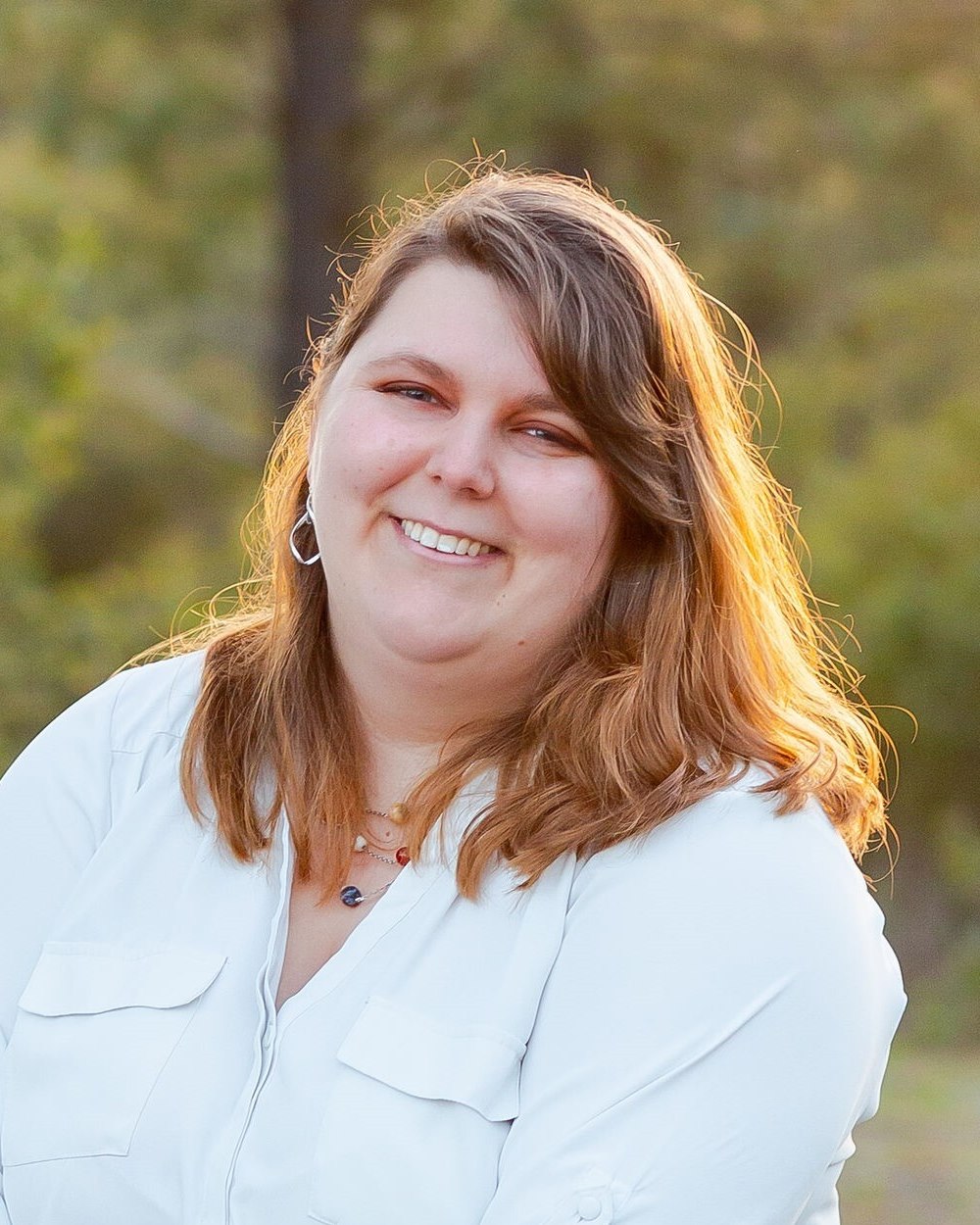 Awaiting photo · assets/chloe-maitrejean.jpg
A one-minute hello
Meet Chloe before the workshop.
Built by Amia.ai
Built by Amia.ai, led by Louis Lalas.
Louis Lalas is the Founder and CEO of Amia.ai. Before founding Amia, Louis led agentic AI architecture at Genentech, building enterprise agentic workflows, RAG and search systems, and production governance for AI in life sciences.
Amia Academy is how that work reaches the people doing clinical and regulatory writing: practical training grounded in real production experience, not theory.

Register
Reserve your seat for the CSR workshop.
Pick a session and register through Luma. Choose the virtual session or the in-person day in San Diego. Early bird pricing ends November 30, 2026; the last day to sign up is December 31. Each session runs with a minimum of 10 and up to 30-40 seats, and we confirm the cohort on December 15.
Claude Skills for CSR Writing, Virtual
Claude Skills for CSR Writing, In-Person
Invoices, POs & group rates
Painless to expense.
Register on Luma to hold your seat. Need an invoice, a purchase order, or a group rate instead? Use this form and we'll send everything your finance team needs.
- ✓Itemized receipt, every timeA clean, itemized receipt so you can expense without a back-and-forth.
- ✓Purchase orders for teamsBuying several seats? Request a PO and we handle the paperwork once.
- ✓California buyersYour purchase may qualify through the California Employment Training Panel (ETP). Ask us and we'll help you check.
- ✓Key datesRegistration opens November 6. We confirm the cohort on December 15. Last day to sign up is December 31.
Questions